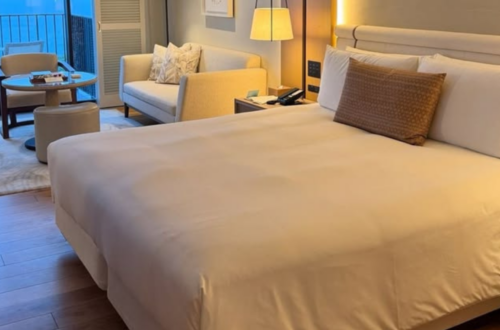
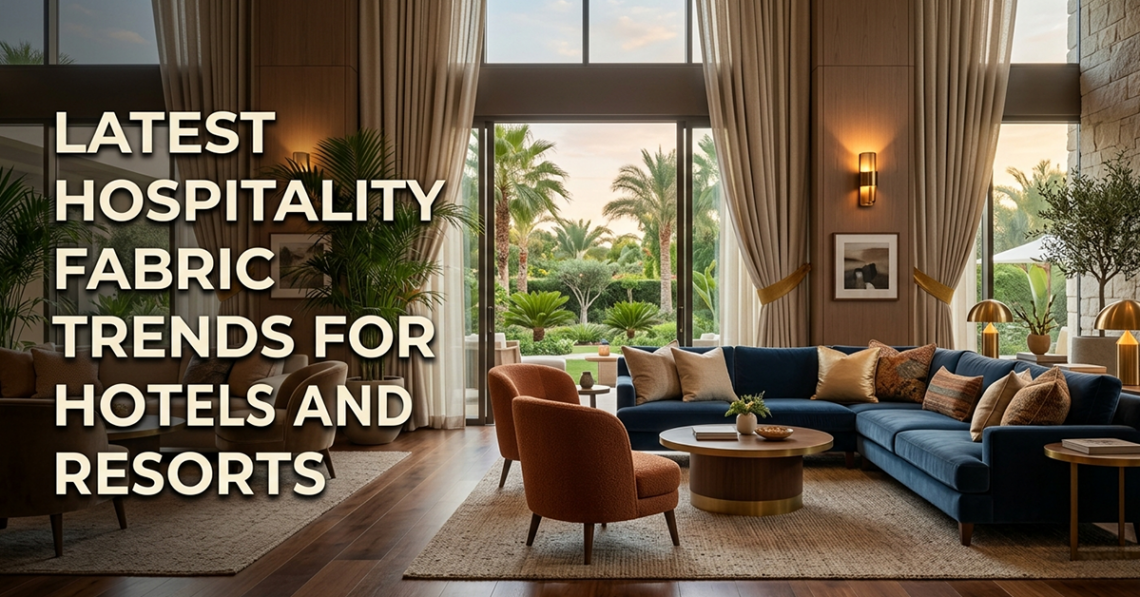
The hospitality industry is undergoing a fundamental shift in how it approaches interior aesthetics and procurement logic. For a decade, the “sterile white” look dominated guest rooms because it signaled cleanliness to the traveler. However, guests now seek environments that feel residential and less institutional, forcing hotel owners to reconsider their textile choices. For procurement managers, this evolution presents a massive challenge because you must find materials that provide a high-end feel while surviving the intense chemical and thermal stress of an industrial laundry. Working with an experienced hotel linen supplier is no longer just a purchasing decision but a strategic necessity to ensure these new textures do not fall apart within a few months.
Moving Beyond the Standard White Sateen
Five-star properties are finally moving away from the flat, predictable look of plain white sateen. While sateen was the industry standard for years, it lacked the character and tactile depth that modern travelers now expect. There’s been a clear shift toward textured weaves like waffle, piqué, and detailed jacquards. A plain, smooth sheet doesn’t offer the same depth or hand feel. This is where premium fabrics for resorts are changing expectations, many property owners now rely on texture to create a more refined guest experience without needing strong colours or patterns.
- Tactile Variety: Waffle textures are moving from the spa into the bedroom. They provide an organic look and are exceptionally durable even under high-heat drying.
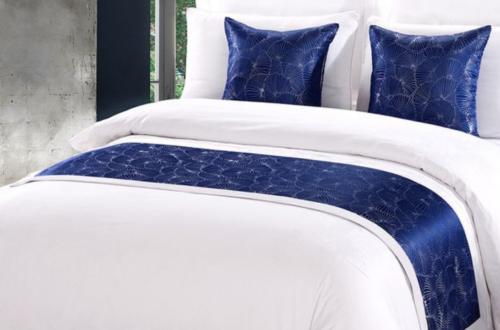
- Structural Design: Jacquard patterns allow for branding to be woven directly into the thread. This survives industrial laundering much better than any printed alternative.
- Visual Interest: Subtle satin stripes are evolving. Tone-on-tone variations are now the preferred choice for an understated, modern aesthetic.
This specific type of hotel fabric creates visual interest through physical depth. It effectively eliminates the need for loud colors that often age poorly or clash with future design updates. Housekeeping also benefits from this shift. Flat sateen reveals every minor wrinkle during the bed-making process. A textured duvet cover or throw hides these issues, keeping the room looking premium during high-occupancy periods when staff are working at maximum speed.
The Rise of Performance Blends and Technical Durability
Luxury in a hotel setting is irrelevant if the material cannot survive thirty industrial wash cycles. The current focus is on creating luxury hospitality fabrics that bridge the gap between residential softness and the extreme tensile strength required for commercial use. This is achieved by controlling the process from the yarn stage, ensuring the tension of the weave is specifically adjusted for high-temperature laundering.
Standard retail sheets use shorter cotton fibers prone to pilling and thinning when exposed to the 80-degree Celsius temperatures of a commercial laundry. High-performance luxury hospitality fabrics utilize long-staple cotton that has been combed to remove weaker strands. This results in a smoother surface that maintains its structural integrity through 200 or more wash cycles. We are also seeing a move toward cotton-rich blends that incorporate a small percentage of high-grade polyester at the core of the yarn. This allows the guest to feel only natural cotton against their skin while the synthetic core provides the strength and wrinkle resistance needed for rapid turnaround in the laundry.
The Practicality of Sustainable Procurement
Resorts operating in the Maldives or the Western Ghats face a level of environmental scrutiny that makes traditional procurement impossible. If your fabric supplier doesn’t utilize a zero liquid discharge (ZLD) system, they are essentially dumping dye waste into the local environment, which is a liability for any brand claiming to be eco-friendly. It is a binary choice for many international chains now. We are seeing a move toward vertically integrated mills because they can prove exactly how much water was recycled and where the chemical sludge ended up. This transparency is the only way to satisfy modern ESG audits that have moved beyond simple paper-saving initiatives.
The Evolution of Bath Linens and Guest Comfort
The bathroom is often where the guest’s perception of quality is finalized, and nothing ruins that experience faster than a thin, scratchy towel. The current trend is toward ultra-high GSM bath linens that provide a cloud-like sensation. For luxury properties, this means towels with a GSM of 600 or 700. These are constructed using zero-twist technology, a spinning process that keeps the cotton fibers open and airy rather than twisting them into a hard cord. This makes the towel significantly softer and more absorbent than standard institutional linens. Sourcing premium fabrics for resorts at this GSM level requires working with mills that specialize in commercial-grade zero-twist construction rather than standard retail production.
Maintaining the durability of these heavy towels requires addressing specific mechanical failure points that occur in the laundry.
- Edge Integrity: Standard towels often unravel at the corners because the centrifugal force of industrial extractors pulls the threads apart. Double-lock stitching on all four hems is a structural necessity that prevents the towel from shredding into a mess of loose threads after fifty cycles.
- Uniform Shrinkage: Borders and the main fabric don’t always react the same in wash cycles. When one tightens more than the other, the edges start pulling in. With controlled weaving, both sections behave similarly, so the towel keeps its shape.
- Absorbency Optimization: In zero-twist cotton, the fibres aren’t tightly spun, so more of the surface stays exposed. That makes it pick up water quickly, without turning dense or staying damp for too long.
Durability Requirements in High-Traffic Public Areas
High-traffic areas like the lobby or poolside put much more stress on textiles than a guest room ever will. You can’t just rely on a topical spray-on coating that disappears after a few deep cleans. For a durable fabric for the hospitality industry standard, the protection has to be baked into the fiber itself during the manufacturing process. This ensures the furniture stays stain-resistant and hygienic even after years of spills and sun exposure.
Poolside and outdoor fabrics present unique challenges:
- UV Resistance: Constant exposure to intense sunlight can degrade inferior fibers within a single season.
- Chemical Exposure: Chlorine and salt air cause standard fabrics to become brittle and lose their color.
- Solution-Dyeing: The current solution involves adding pigment while the fiber is still liquid. This ensures the color is consistent throughout the thread, making it nearly impossible to fade.
These durable fabrics for hospitality industry investments save properties thousands in upholstery costs by pushing the replacement cycle from one year to four or five years.
Managing the Technical Logistics of Textile Storage
Poor logistics is usually the hidden reason why high-end linens fail before their time. If a fresh shipment is left in a humid, unventilated container or a damp port warehouse, the fabric often develops foxing. These yellow fungal spots are permanent; no amount of industrial bleaching will remove them without destroying the fibers.
- Direct Supply Chains: Bypassing traders ensures a transparent view of exactly how and where the fabric was kept.
- Rapid Transit: Moving material quickly from the stitching unit to the hotel linen room prevents long-term exposure to uncontrolled environments.
- Predictable Quality: Dealing directly with the manufacturers who own the looms eliminates the hidden damage caused by poor warehouse standards.
The Future of Smart and Circular Textiles
The next several years will see an even greater blending of technology and natural fibers. We are beginning to see moisture-wicking bed linens that regulate a guest’s body temperature throughout the night. There is also a growing movement toward circularity, where old and worn-out linens are recycled back into new textile products rather than being sent to a landfill.
Selecting the right textile partner is the most critical step in navigating these shifts. You need a team that understands the technical limits of materials and the design goals of the architects. When you work with the most reliable hotel bed sheet suppliers, you buy the peace of mind that comes with knowing your inventory can handle a 100% occupancy rate without looking worn. The goal is a guest experience where the fabric is so comfortable and durable that it remains invisible, providing a sense of effortless luxury that encourages guests to return.