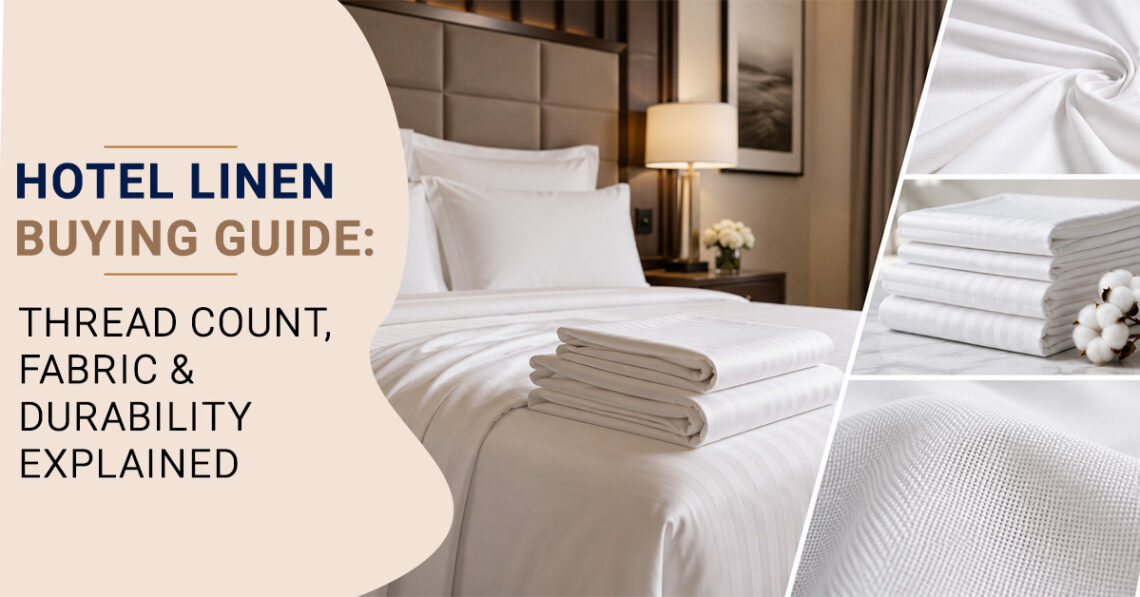
Buying linen for a hotel isn’t like buying a home. The volumes are larger, the usage is harder, and the expectations from guests are non-negotiable. A sheet that feels pleasant after ten washes means nothing if it’s pilling and greying after two hundred. Getting linen procurement right requires understanding what the numbers and labels on linen products actually mean, because thread count alone doesn’t tell the full story, and fabric choice affects everything from guest comfort to your laundry costs. Whether you’re outfitting a new property or replacing an ageing inventory, working with reliable hotel bed sheet suppliers from the start saves significant cost and reputational damage down the line.
Thread Count: What It Actually Means
Thread count measures the number of threads woven into one square inch of fabric, both horizontal (weft) and vertical (warp) threads combined. It’s the most cited number in linen buying and also the most misunderstood.
The common belief is that higher thread count equals better quality. Up to a point, that’s true. But beyond 600, manufacturers often achieve high counts by using multi-ply threads, twisting two or three thinner threads together and counting each strand separately. The result is a heavier, stiffer fabric that feels dense rather than luxurious and actually performs worse over repeated washing.
For hotel use, the practical breakdown: 200–300 TC is durable and breathable, well-suited to budget and mid-range properties that put linen through the wash daily. 300–400 TC is where most hotels land, soft enough for guests to notice and tough enough for commercial cycles. 400–600 TC suits luxury properties; the softness is real, but the laundering needs to be more careful to maintain it. Beyond 600, the number is usually a product of multiplying counts and rarely translates to a better feel. For commercial use, it’s almost never worth the premium.
The thread count number should always be read alongside the fabric type, because a 300 TC cotton sheet and a 300 TC polyester-cotton blend perform very differently.
Fabric Types and What They Mean for Hotels
100% Cotton
Pure cotton is what most guests are hoping for when they slide into a hotel bed. It breathes well, softens with washing, and long-staple varieties like Egyptian cotton resist pilling long enough to justify the higher price per unit. The downside is real: it wrinkles, it needs proper drying and pressing, and inconsistent laundry protocols will cause shrinkage over time. For hotels that prioritise sheet quality as part of the guest experience, choosing Egyptian cotton is still the right call. For properties running 300 rooms at full occupancy, the laundry overhead is worth thinking through first.
Cotton-Polyester Blend
A 60/40 or 50/50 cotton-polyester mix is what high-turnover hotels usually land on. The polyester keeps it wrinkle-resistant, shrink-resistant, and tough enough for daily commercial laundering. It doesn’t feel quite like pure cotton against the skin, and guests who notice linen quality will notice the difference. But for budget and mid-range properties where durability and cost-per-wash matter more than that premium feel, the blend is a sensible choice.
Percale Weave
Percale has a one-over-one-under structure that gives it a crisp, matte finish. It’s cool to sleep on, which makes it a particularly good fit for South Indian hotels where the climate does most of the work against a good night’s sleep. Guests who run warm tend to prefer it.
Sateen Weave
Sateen’s four-over-one-under construction produces a silkier surface with a slight sheen. It looks more expensive on the bed and feels softer to the touch. It also snags more easily and needs more careful handling in laundry. Best suited to luxury properties where presentation carries weight.
Durability: The Number Hotels Actually Need to Optimise For
Thread count and fabric type determine comfort. Durability determines cost-per-use, which is what procurement actually runs on.
A sheet that costs more upfront but survives 400 commercial wash cycles is cheaper than a budget option that starts fraying at 150. The indicators worth checking before you commit to a supplier:
Tensile strength tells you how much the fabric can take before it tears, relevant when sheets go through industrial laundry equipment daily.
Shrinkage control matters because uncontrolled shrinkage distorts fit and puts stress on the fabric edges with every wash. Ask whether it’s been pre-shrunk and what percentage to expect over time.
Colour fastness for white linens means resistance to yellowing and greying, both of which guests notice immediately.
Pilling resistance is usually the first thing to go visually. A pilled sheet signals age and wear before anything else does.
Reputable Hotel Bed Sheet Suppliers will have test data for these parameters: shrinkage percentages, wash cycle ratings, and fabric purity certification. If a supplier can’t provide this information, that’s a signal worth taking seriously.
What to Ask Before You Order
Most hotels make linen procurement decisions based on price per unit and a sample feel. That’s not enough. A few questions that reveal more about a supplier’s quality:
What is the yarn quality? Long-staple cotton yarns produce finer, stronger threads. Short-staple yarns feel coarser and break down faster.
Is the fabric pre-shrunk? Pre-shrinking adds a step to manufacturing but significantly reduces fit problems after the first few washes.
What quality control tests does the fabric undergo? Skin-friendliness, shrinkage control, and colour fastness are the three most important. Suppliers who test for all three are operating to a higher standard.
Can the supplier handle customisation? Hotels often need embroidered logos, custom sizing, or specific colour matching. Not every supplier has the capacity for this without compromising lead times.
What is the minimum order quantity and lead time? For a hotel replacing inventory in phases, flexibility on order size matters as much as the product quality itself.
KKR Linens, among the most established hotel linen suppliers in Chennai, manufactures directly from its facility in Karur, operating 40 Sulzer looms and over 100 sewing machines, and supplies to hotels, hospitals, and spas directly without intermediaries. Every fabric batch goes through three rounds of quality control covering purity, skin-friendliness, and shrinkage before it leaves the unit.
Size and Fit: Often Overlooked, Always Matters
Standard sizing charts from suppliers don’t always match mattress dimensions across different hotel room categories. A sheet that fits a standard queen in one configuration may not tuck properly on a platform bed or a thicker pillow-top mattress.
Before committing to bulk orders, always test samples on your actual mattresses. Check the pocket depth on fitted sheets, the drop length on flat sheets, and how the fabric behaves after the first few washes. These are details that only become visible after you’ve ordered 200 units and find they don’t fit the way the spec sheet promised.
Building a Linen Specification for Your Property
A linen specification document saves time, reduces ordering errors, and gives suppliers clear targets to meet. It should include:
- Fabric type and percentage composition
- Thread count range and weave type
- Required dimensions for each room category
- Shrinkage tolerance (typically no more than 3–5%)
- Colour and finish specifications
- Logo or embroidery requirements
- Expected wash cycle durability
Sharing this document with prospective hotel bed sheet suppliers before requesting quotes filters out suppliers who can’t meet the standard and gives you a consistent basis for comparing those who can.
For hotels across Tamil Nadu and beyond, hotel linen suppliers in Chennai like KKR Linens offer the advantage of direct manufacturer access: shorter lead times, more flexibility on custom orders, and pricing that reflects direct supply rather than distributor markups. When linen quality is non-negotiable and laundry budgets are fixed, that combination is worth building a procurement relationship around.