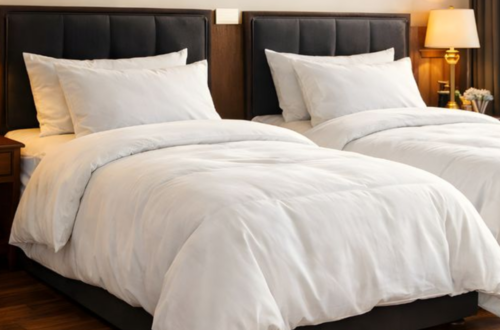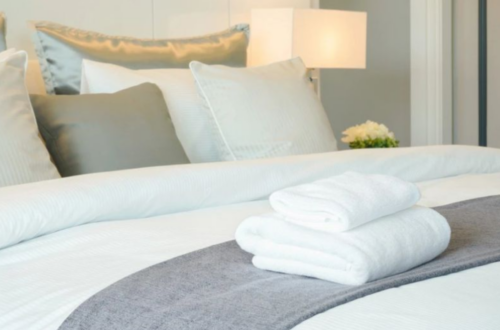
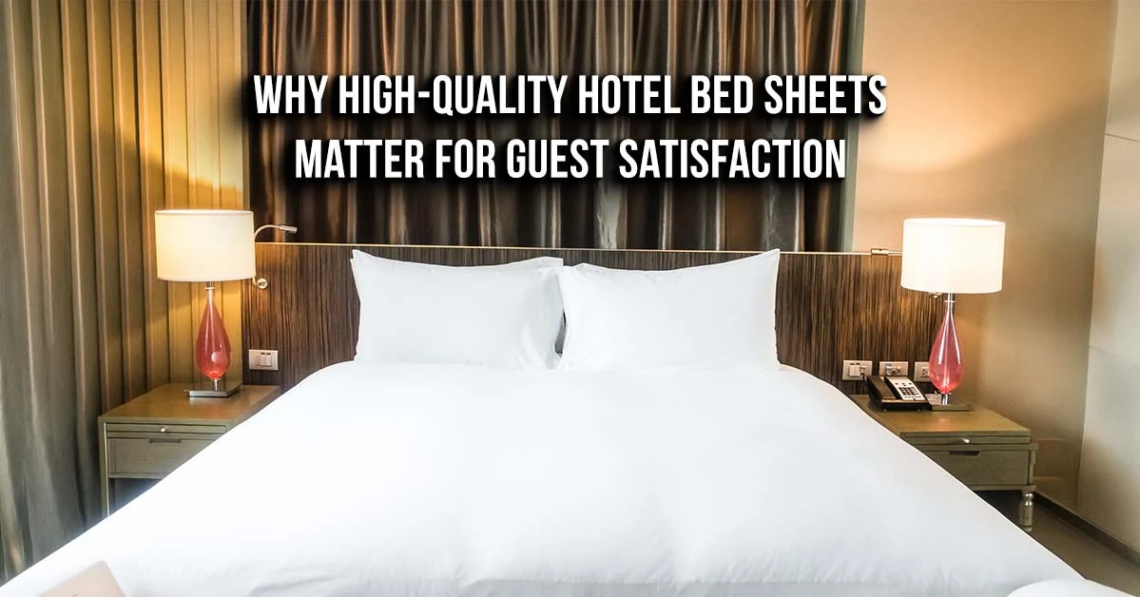
A guest’s first interaction with a hotel room is almost entirely visual, but their lasting impression is tactile. The bed occupies the majority of the room’s real estate and, by extension, the majority of the guest’s cognitive focus. If the linens are limp, off-white, or pilled, the hotel’s perceived value drops before the guest even unpacks. Maintaining high Hotel bedding quality is not an aesthetic choice; it is a fundamental risk management strategy. You are protecting your brand’s reputation against the most common complaint in the hospitality industry: poor sleep. A bed is a sanctuary. When the sheets are crisp, cool, and structurally sound, they signal to the guest that the property prioritizes hygiene and comfort at a granular level.
In the competitive Indian market, sourcing is the differentiator. Many properties struggle with linens that look excellent in a showroom but fail after twenty industrial wash cycles. This is why many procurement managers are shifting their focus toward established Hotel Linen Manufacturers in India who understand the local challenges of hard water and high-temperature laundering. You need fabric that doesn’t just feel good on day one; you need fabric that maintains its integrity through months of chemical exposure and high-pressure ironing.
The Psychology of the “Crisp White Bed”
There is a reason the industry standard remains white. It is the color of transparency. White linens cannot hide stains, hair, or wear. For a guest, a stark white bed is a guarantee of cleanliness. However, the psychological impact goes deeper than hygiene. High-quality cotton has a specific “hand” or feel that synthetic blends cannot replicate. It breathes. It regulates temperature.
- Tactile Trust: A guest can feel the difference between 200 and 400 thread count immediately. If the sheet feels “thin,” the guest feels exposed.
- Temperature Regulation: Synthetic fibers trap heat. In tropical climates, this leads to night sweats and a restless stay.
- The Sound of Luxury: High-quality percale has a subtle “rustle” that guests associate with premium properties. It sounds clean.
When you partner with reliable Hotel Bed Sheet Suppliers, you are buying more than fabric. You are buying the ability to offer a consistent sensory experience. If your sheets vary in texture from room to room, you are telling your guests that your quality control is inconsistent. Consistency is the hallmark of luxury.
Sourcing and Material Integrity
The term “Thread Count” has been used as a marketing shield for years, often masking poor-quality fibers. A 600-thread count sheet made from short-staple cotton will feel rougher and pill faster than a 300-thread count sheet made from long-staple Indian cotton. You have to look at the yarn quality. Short fibers poke out of the weave, creating that “fuzzy” texture that guests hate. Long-staple cotton ensures a smooth surface that reflects light and feels like silk against the skin.
Many Hotel Linen Manufacturers in India have refined the balance between comfort and durability. They utilize ring-spun yarns that offer higher tensile strength. This is critical because hotel sheets are not washed like domestic linens. They are subjected to heavy-duty detergents, bleach, and mechanical stress. If the base material is weak, the sheet will develop “pinholes” or thinning patches within weeks.
Understanding Hospitality Bedding Standards
Operational efficiency depends on how well your linens stand up to the laundry. Hospitality bedding standards dictate that a sheet should survive at least 150 to 200 industrial wash cycles before showing signs of significant degradation. If your linens are graying or losing their “snap” after fifty washes, your cost-per-use is too high. You might have saved 10% on the initial purchase, but you are losing 40% on the replacement cycle.
- Whiteness Retention: Quality linens are treated to resist the “yellowing” caused by mineral buildup in hard water.
- Shrinkage Control: Professional grade sheets are pre-shrunk or oversized to account for the high-heat drying required in commercial laundries.
- Hem Integrity: Look at the stitching. Double-needle stitching and high stitch density prevent the hems from fraying or “smiling” after repeated use.
The technical specs are your only defense against a bad investment. Don’t just ask for the price. Ask for the weight (GSM), the yarn count, and the pilling resistance rating. If your Hotel Bed Sheet Suppliers cannot provide a technical data sheet, they are likely trading in retail-grade products disguised as hospitality-grade.
The Impact of Weave: Percale vs. Sateen
The choice of weave determines the guest’s physical experience. Percale is the traditional “crisp” hotel sheet. It features a one-over, one-under weave that is highly breathable and durable. It’s perfect for hotels in warmer regions because it stays cool. Sateen, on the other hand, uses a four-over, one-under weave. It’s heavier, feels smoother, and has a lustrous sheen.
Most luxury properties prefer sateen for its “wow” factor, but it requires more careful handling. It is more prone to snagging and can feel too warm for some guests. Percale is the workhorse of the industry. It gets softer with every wash and maintains that classic hotel look. Your choice should be dictated by your property’s climate and your laundry capabilities. If your laundry team isn’t equipped to handle delicate sateen finishes, the sheets will look wrinkled and unprofessional.
Sourcing Strategy for Indian Hoteliers
India is one of the world’s largest producers of high-grade cotton, yet many hotels still settle for mediocre imports. By working directly with Hotel Linen Manufacturers in India, you reduce lead times and ensure better quality oversight. You can specify the exact blend, usually an 80/20 or 70/30 cotton-polyester mix for mid-range properties, or 100% combed cotton for five-star establishments.
The polyester blend is not necessarily a “cheap” option. A small amount of high-quality polyester increases the lifespan of the sheet and reduces wrinkling. It makes the sheets easier to iron and faster to dry, which saves on energy costs. However, if the polyester content is too high, the sheet will feel “plastic” and cause guest discomfort. The balance must be exact.
The Hidden Cost of Low-Quality Linens
Procurement is often driven by the initial invoice, but the real cost of a bed sheet is calculated over its entire lifespan.
- Labor Costs: If sheets are difficult to iron, your housekeeping staff takes longer per room.
- Guest Compensation: A single “comped” night due to a guest complaining about scratchy sheets can wipe out the savings from buying five sets of cheap linens.
- Environmental Impact: Cheap linens that need frequent replacement end up in landfills. High-quality, durable sheets are the more sustainable choice.
When you audit your current stock, look for “graying.” This is usually a sign that the fibers have been damaged by harsh chemicals because the cotton wasn’t strong enough to withstand the required cleaning intensity. Professional grade linens from reputable Hotel Bed Sheet Suppliers are engineered to release stains at lower temperatures, preserving the fiber and the color for longer.
Enhancing the Sleep Environment
A guest isn’t just buying a room; they are buying a night of rest. In the era of online reviews, a single mention of “uncomfortable bedding” can tank your booking rate for months. People remember how they slept. They remember the weight of the duvet and the smoothness of the pillowcase.
Investing in high-end linens is an investment in your marketing. It’s much easier to sell a room when you can truthfully claim a “premium sleep experience.” This goes beyond the sheets to include mattress protectors, duvet covers, and shams. Every layer must be synchronized. If you put a high-quality sheet over a cheap, crinkly mattress protector, the guest will still have a poor experience.
The final check should always be the “cheek test.” If a pillowcase doesn’t feel soft against your face, it isn’t good enough for your guest. By maintaining rigorous Guest comfort in hotel rooms, you ensure that the centerpiece of your property, the bed, is a reason for guests to return rather than a reason for them to leave a negative review.