Linen has a charm that never really fades. It’s light, breathable, effortlessly stylish, and one of those fabrics that actually gets better the more you use it. That is why many people use it for summer clothing, bedding, and home decor. Hotel linen supplier brands understand this well. It’s a fact that not every fabric we call linen is the real deal. A lot of clothing is blended with cotton, polyester, or other synthetic materials, and then marketed as linen.
In this blog, we are going to look in detail at how to identify genuine linen fabric and understand what to check before buying it.
Start With the Fabric Label
The first thing to check is the label. Authentic linen will clearly mention “100% Linen” or “Pure Linen.” If you see words like linen blend, linen look, or linen feel, it usually means the fabric is mixed with other fibres.
Cotton-linen and polyester-linen blends are comfortable to wear, but they’re not pure linen. If you’re specifically looking for genuine linen, always read the label carefully before making a purchase.
Feel the Fabric
Linen has a texture you can recognise once you know it. It feels slightly crisp and textured, not soft and silky straight away. This comes from the natural flax fibres used to make linen.
Over time, and with repeated laundering, genuine linen becomes wonderfully soft, all while maintaining its strength. If the material feels overly smooth or slick right away, chances are it’s a blend or a synthetic.
Notice the Natural Imperfections
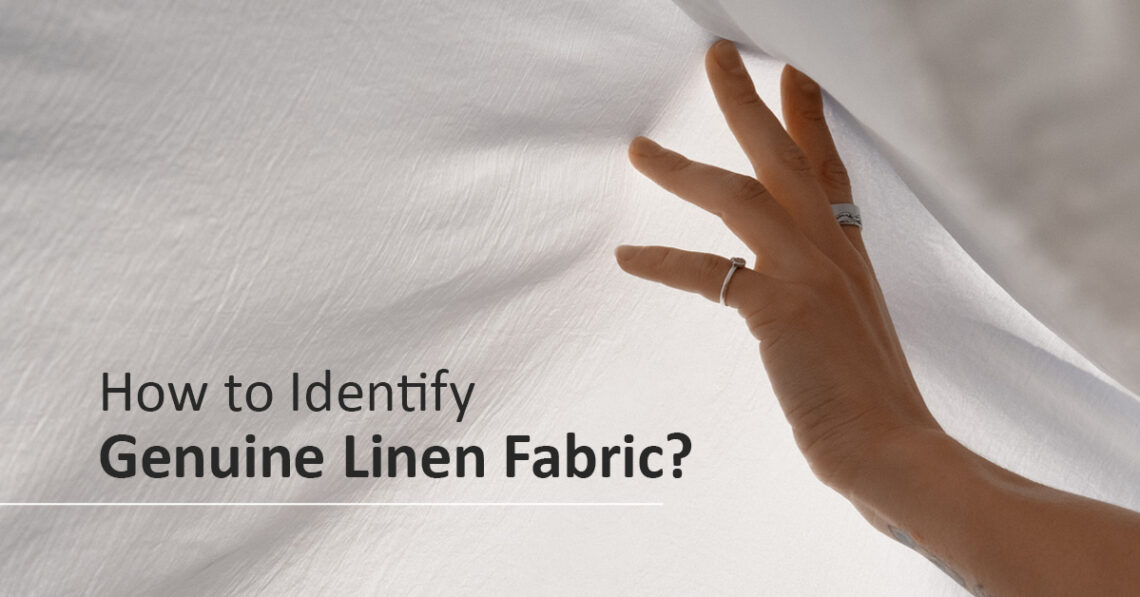
One of the best and easiest ways to find out if linen is genuine is by looking at its surface. Real linen often has tiny slubs, uneven threads, or small variations in thickness. These aren’t defects; they’re signs that the fabric is natural.
Synthetic fabrics usually look too perfect, smooth, and uniform. If everything looks overly polished, chances are it’s not pure linen.
Try the Wrinkle Test
The linen wrinkles test is actually a good thing. Gently scrunch the fabric in your hand and let it go. If it wrinkles quickly and the creases stay, you’re probably holding real linen.
Blended or synthetic fabrics tend to bounce back and stay smooth. So if it refuses to wrinkle, it’s a red flag.
Check Breathability and Weight
Genuine linen is lightweight, airy, and highly breathable, yet surprisingly strong. Hold it up to the light, and a real linen often lets a bit of light pass through because of its natural weave.
It should feel cool and fresh to the touch, which is why linen is perfect for warm and humid weather. If the fabric feels heavy, stiff, or plasticky, it likely contains synthetic fibres.
Do a Burn Test
If you have a small loose thread and it’s safe to do so, a burn test can help. When burned, genuine linen smells like burning paper and leaves behind soft grey ash, whereas synthetic fibres melt, smell like plastic, and form hard beads.
Think About the Price
Pure linen is affordable. Growing flax, extracting the fibers, and then weaving them into fabric is a labor-intensive process, which is why linen can be pricey. So, if you find a “100% linen” piece at a bargain price, it’s wise to be a little skeptical.
Knowing what to look for simplifies the task of spotting authentic linen. Check the label, run your fingers over the fabric, notice some wrinkles, and stick with your instincts. Linen’s charm lies in its imperfections; it’s not supposed to be flawless.
Choosing real linen means choosing comfort, durability, and a fabric that grows softer and more beautiful with time. This approach is followed by many Hotel Bed Sheet Suppliers, such as KKR Linen, helping customers enjoy the true, timeless appeal of linen for years to come.